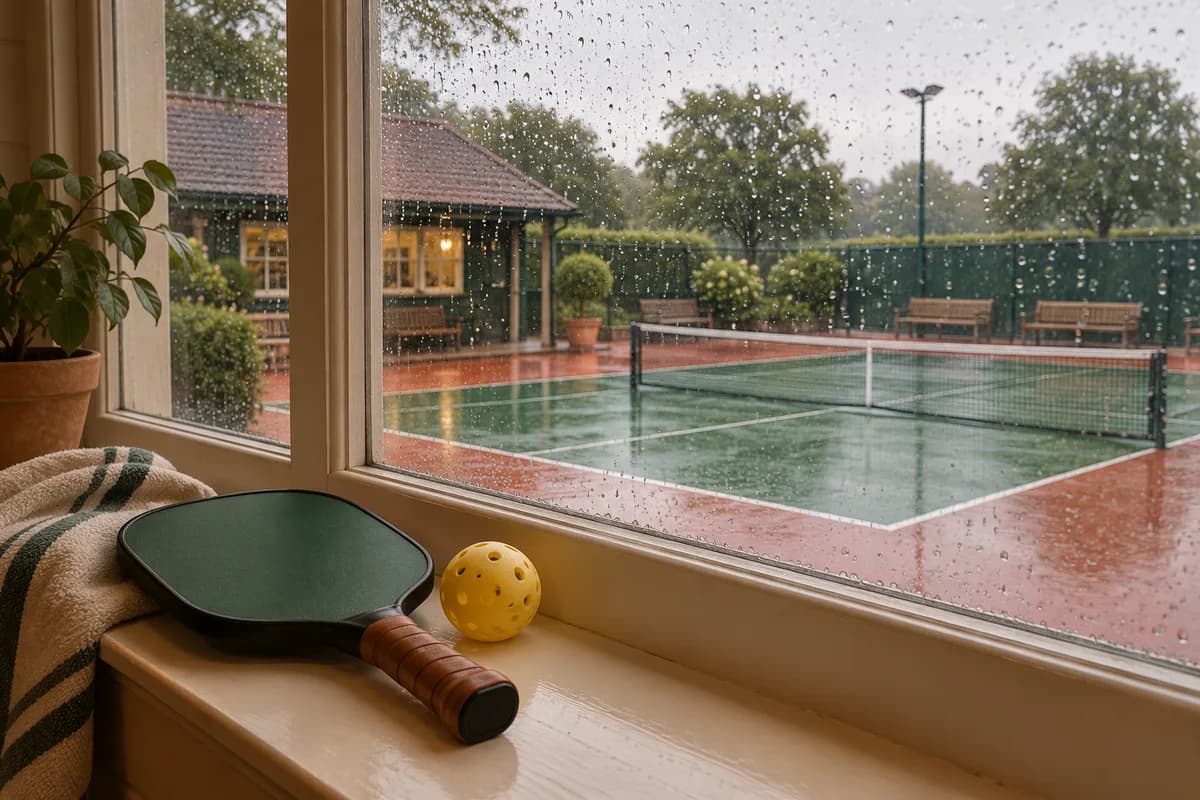
An outdoor booking can look straightforward when you arrange it and rather different when you wake up on match day. You cannot control the weather, but you can agree how you will make a decision before anyone starts travelling.
The best backup plan is usually a short conversation, not a second paid booking. Know who will check the venue, when you will contact each other and what happens if you need another date.
Check the venue's terms first
Find out how the venue handles weather closures, cancellations and moving a booking. Do not assume a refund or credit is automatic. If one player is paying upfront, agree how you will handle any unrecoverable cost before making the booking.
Check lighting and access as well as the forecast. A court may be playable in the afternoon but unavailable after reception closes, or lighting may need a separate arrangement. These details are worth settling while someone at the venue can answer.
Agree a decision time
Choose a time to check in before either side needs to leave. The right time depends on travel distance and the venue's cancellation window. Send a clear message confirming whether the match is going ahead; silence should not mean one player travels while the other stays home.
For doubles, make sure the decision reaches all four players. One person can coordinate, but everyone needs the final plan rather than a half-finished discussion.
Let the venue guide court availability
If conditions look doubtful, ask the venue whether the court is open and suitable for play. Do not treat a booking confirmation as proof of the surface condition that day. If there is a safety concern on arrival, stop and discuss it with the venue rather than feeling obliged to play because you have already travelled.
If you consider an indoor alternative, check availability, cost and suitability with everyone before paying. A change of venue is a new agreement, not something one player has to accept without discussion.
Keep a little space in the season
Offer replacement dates as soon as you cancel. Leaving spare time before the deadline is much easier than trying to fit a whole division's postponed fixtures into the last weekend.
If you cannot find a date within the season, contact the organiser with a concise account of the arrangements attempted. Do not submit a score for a match that did not happen or decide a walkover between yourselves without the organiser's process.
Next step: use the fixture-arranging checklist to put the confirmed plan in one message.